Showing posts with label Java Information. Show all posts

Monday, February 13, 2023

How to Care Java Sparrows

How to Care Java Sparrows


Java Sparrows are known to be easy to care for and make great pets, but they still require proper care and attention to ensure that they stay healthy and happy. Some general guidelines for caring for Java Sparrows include:

· Providing a Suitable Living Environment: 

Java Sparrows need a cage or aviary that is at least 2 feet wide, 2 feet deep, and 2 feet high, with perches of different diameters and textures, and a variety of toys to keep them mentally stimulated.

· Providing a Healthy Diet: 

Java Sparrows are primarily seed-eating birds, and their diet should consist primarily of a good-quality finch seed mix. This should be supplemented with small amounts of other seeds, such as millet, canary seed, and niger seed, as well as a small amount of green food, such as lettuce or spinach. They also enjoy a variety of fruits, such as apples, pears, and bananas.

· Providing Fresh Water: 

Java Sparrows need fresh water daily and clean and disinfect the feed and water dishes regularly

· Providing a Source of Calcium: 

Java Sparrows require a source of calcium in their diet, which can be provided by crushed eggshells or cuttlebone.

· Providing Daily Interaction: 

Java Sparrows are social birds and enjoy interacting with their owners. They should be provided with daily interaction and should be kept in pairs or small groups.

· Providing a Clean Environment: 

Java Sparrows need a clean environment to stay healthy, so their cage or aviary should be cleaned and disinfected regularly.

· Providing Protection From Sunlight: 

Java Sparrows, especially the white and yellow varieties, are more sensitive to sunburn and skin cancers due to their lack of pigmentation, so they should be protected from direct sunlight or UV lights.

· Consulting With An Avian Veterinarian: 

if there are any concerns about the bird's health, it's important to consult with an avian veterinarian to ensure that the bird is getting the proper care it needs.

By following these guidelines, you will be able to provide a comfortable and healthy home for your Java Sparrow and have a happy and healthy pet bird.

Sunday, February 12, 2023

List of Toys for Java Sparrows


List of Toys for Java Sparrows


Java sparrows are playful birds that enjoy interacting with a variety of toys. Here is a list of toys that you can provide for your Java sparrow:

1. Ladders and Swings: Java sparrows love to climb and swing, so providing them with ladders and swings can keep them entertained and active.

2. Bells: Bells can be a great source of entertainment for Java sparrows, as they love to ring them and listen to the sound.

3. Wooden and plastic blocks: Java sparrows love to chew and shred things, so providing them with wooden or plastic blocks can give them something to play with and also help to keep their beaks trimmed.

4. Mirrors: Java sparrows enjoy interacting with their reflection, and a mirror can provide them with hours of entertainment.

5. Foraging Toys: Java sparrows love to forage for food, so providing them with foraging toys, such as puzzle feeders, can keep them mentally stimulated and engaged.

6. Rope Toys: Rope toys can be a great source of entertainment for Java sparrows, as they love to climb and swing from them.

7. Shredding Toys: Java sparrows love to chew and shred things, so providing them with toys that they can shred can keep them entertained and also help to keep their beaks trimmed.

8. Bath Toys: Java sparrows love to bathe, so providing them with a small container of water and some toys to play with can be a fun way to entertain and keep them clean.

9. Natural Toys: Java sparrows enjoy playing with natural materials such as twigs, leaves, and small branches. Variety of toys: Java sparrows like variety, so rotating their toys every few days can keep them interested and mentally stimulated.

Chicks of Java Sparrows


Chicks of Java Sparrows

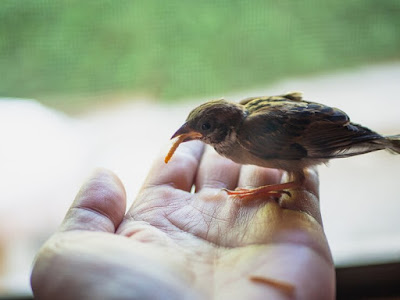
Java Sparrow chicks, also known as nestlings, are born with a fluffy, pale gray down, which will eventually be replaced by their adult plumage. Both parents take part in feeding the chicks, and they are fed a diet of regurgitated seeds and other soft foods. The chicks will fledge at around 18-20 days old, at which point they will be able to leave the nest and fly.

Java Sparrow chicks are very active and are able to move around and explore their surroundings from a very young age. They are also very curious and enjoy playing with toys and other objects in their environment. They grow quickly and will be fully feathered and independent at around 4-6 weeks of age.

It's important to note that Java Sparrows are not wild birds and are not found in the wild. They are only found as pet birds, and breeding them in captivity requires proper knowledge, care, and facilities. It's important to provide them with a suitable environment and diet, as well as to consult with an avian veterinarian if there are any concerns about their health or breeding.

Also, it's important to keep in mind that adult Java Sparrows have strong territorial behavior and should not be housed together once they reach maturity, as they may become aggressive and start fighting.

Breeding Season of Java Sparrows


Breeding Season of Java Sparrows


The breeding season for Java Sparrows varies depending on the location and climate. In the wild, they typically breed during the rainy season, which is from October to March in their native range of eastern Java and Bali in Indonesia. However, in captivity, they can breed year-round, depending on the conditions provided by the owner.

During the breeding season, the male Java Sparrows will engage in courtship displays to attract a mate. They will puff up their feathers, sing, and perform a dance to impress the females. Once a pair has formed, they will begin building a nest. Both the male and female will take turns building the nest, which is usually a cup-shaped structure made of grass and other plant material, and is usually located in a secluded area.

The female will lay 2-6 eggs, and both parents will take turns incubating them for about 13-14 days. Once the eggs hatch, both parents will help to feed and care for the chicks. The chicks will fledge at about 18-20 days old.

It's worth noting that Java Sparrows are not wild birds and are not found in the wild. They are only found as pet birds, and breeding them in captivity requires proper knowledge, care, and facilities. It's important to provide them with a suitable environment and diet, as well as to consult with an avian veterinarian if there are any concerns about their health or breeding.

Nesting of Java Sparrows | How do Java Sparrow Nest In?

Nesting of Java Sparrows

Java Sparrows are known for building a cup-shaped nest of grass and other plant material, which is lined with feathers or other soft materials. The nest is usually located in a secluded area, such as a dense bush or tall grass. Both the male and female take turns to build the nest and they will use their beaks and feet to shape and weave the materials together.


Once the nest is completed, the female will lay 2-6 eggs and both parents will take turns incubating them for about 13-14 days. During this time, the parents will remain in the vicinity of the nest to protect the eggs and chicks from predators.


Once the eggs hatch, both parents will help to feed and care for the chicks. The chicks will fledge at about 18-20 days old. Both parents will continue to feed the chicks for a few weeks after they fledge.


It's important to note that Java Sparrows are not wild birds and are not found in the wild. They are only found as pet birds, and breeding them in captivity requires proper knowledge, care, and facilities. It's important to provide them with a suitable environment and diet, as well as to consult with an avian veterinarian if there are any concerns about their health or breeding.

Food of Java Sparrow | Seed and Soft Food of Java Sparrow


Food of Java Sparrow | Seed and Soft Food of Java Sparrow

Java Sparrows are seed-eating birds, and their diet should consist primarily of a good-quality finch seed mix. This should be supplemented with small amounts of other seeds, such as millet, canary seed, and niger seed, as well as a small amount of green food, such as lettuce or spinach. They also enjoy a variety of fruits, such as apples, pears, and bananas.

In addition to seed and fruit, Java Sparrows require a source of calcium in their diet, which can be provided by crushed eggshells or cuttlebone.

It is important to provide fresh water daily, as well as to clean and disinfect the feed and water dishes regularly.

Java Sparrows are also known to enjoy a variety of live foods, such as mealworms and waxworms, which can be offered as a treat. But, it is important to note that these should be offered in moderation, as a diet high in protein can lead to health problems for the bird.

It is also important to make sure that the birds have access to fresh food and water at all times and to avoid overfeeding as it can lead to obesity and other health problems.

Java Sparrows are known to be hardy birds, but a poor diet can lead to health problems such as feather picking, obesity, and fatty liver disease. So, it's important to provide a well-balanced diet and to consult with an avian veterinarian if there are any concerns about the bird's health.

Java Sparrows are primarily seed-eating birds, but they can also be offered a variety of soft foods as part of their diet. Some examples of soft foods that can be offered to Java Sparrows include:

· Cooked brown rice or pasta

· Cooked or sprouted legumes such as lentils, peas, or chickpeas

· Cooked or steamed vegetables such as carrots, broccoli, or sweet potatoes

· Fruits such as apples, pears, or bananas

· Hard-boiled eggs

· Cooked chicken or lean meats (in small amounts)

· A variety of live foods such as mealworms and waxworms

It's important to note that while Java Sparrows can eat soft foods, it's important to ensure that their diet is still primarily seed-based, as seeds are a crucial source of essential nutrients for these birds. Also, it's important to avoid overfeeding as it can lead to obesity and other health problems.

It's also important to offer a variety of different foods to ensure that the bird is getting a balanced diet, and to consult with an avian veterinarian if there are any concerns about the bird's health.

It is also important to note that fresh food should be provided daily and any uneaten food should be removed to prevent spoilage and bacterial growth.

Sounds of Java Sparrow | Singing Sounds of Java Sparrow


Sounds of Java Sparrow | Singing Sounds of Java Sparrow

Java Sparrows are known for their melodious songs, which are a combination of chirps, trills, and whistles. Their songs are quite varied and can include a range of different sounds and pitches. They are known to be able to mimic other bird calls, and some individuals can even learn to mimic human speech.

The males are known for their particularly beautiful and complex songs, and they use their singing to attract a mate and establish their territory. They sing throughout the day, but the most active singing period is in the morning.

Java Sparrows are social birds and in the wild, they usually live in flocks, and their songs can sometimes form a chorus. In captivity, they can learn to sing with other birds, and it can be quite a beautiful experience to listen to a group of Java Sparrows singing together.

It's worth noting that Java Sparrows are not wild birds and are not found in the wild, they are only found as pet birds. They are not endangered species but they are protected by laws in some countries to not being captured or traded in the wild.

Different Types of Java Sparrow | Top Varieties of Java Finch | Mutations of Java Sparrow

Different Types of Java Sparrow | Top Varieties of Java Finch | Mutations of Java Sparrow


Java Sparrow which is also known as Java Finch, Java Rice Finch, and Java Rice Bird is a small domesticated finch native to eastern Java and Bali in Indonesia. They are popular as cage birds due to their attractive plumage and melodious song. They are also known as Java Finch or Java Rice Sparrow.

Java Sparrows (Padda oryzivora) are small domesticated finches that are native to eastern Java and Bali in Indonesia. They are small birds, measuring around 6 inches (15 cm) in length, with a short, conical bill and a plump body. They are sexually dimorphic, with males having black and white plumage, while females are a duller brown color. They are popular as cage birds due to their attractive plumage and melodious song. They are also known as Java Finch or Java Rice Sparrow. They are not wild birds and are not found in the wild. They are only found as pet birds.

There are several different types or varieties of Java Sparrows that have been developed through selective breeding. Some of the more common types include:

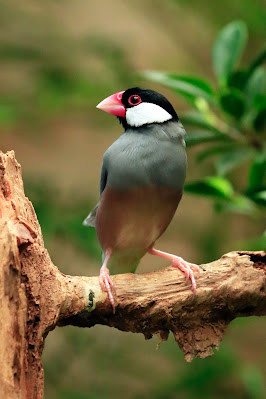
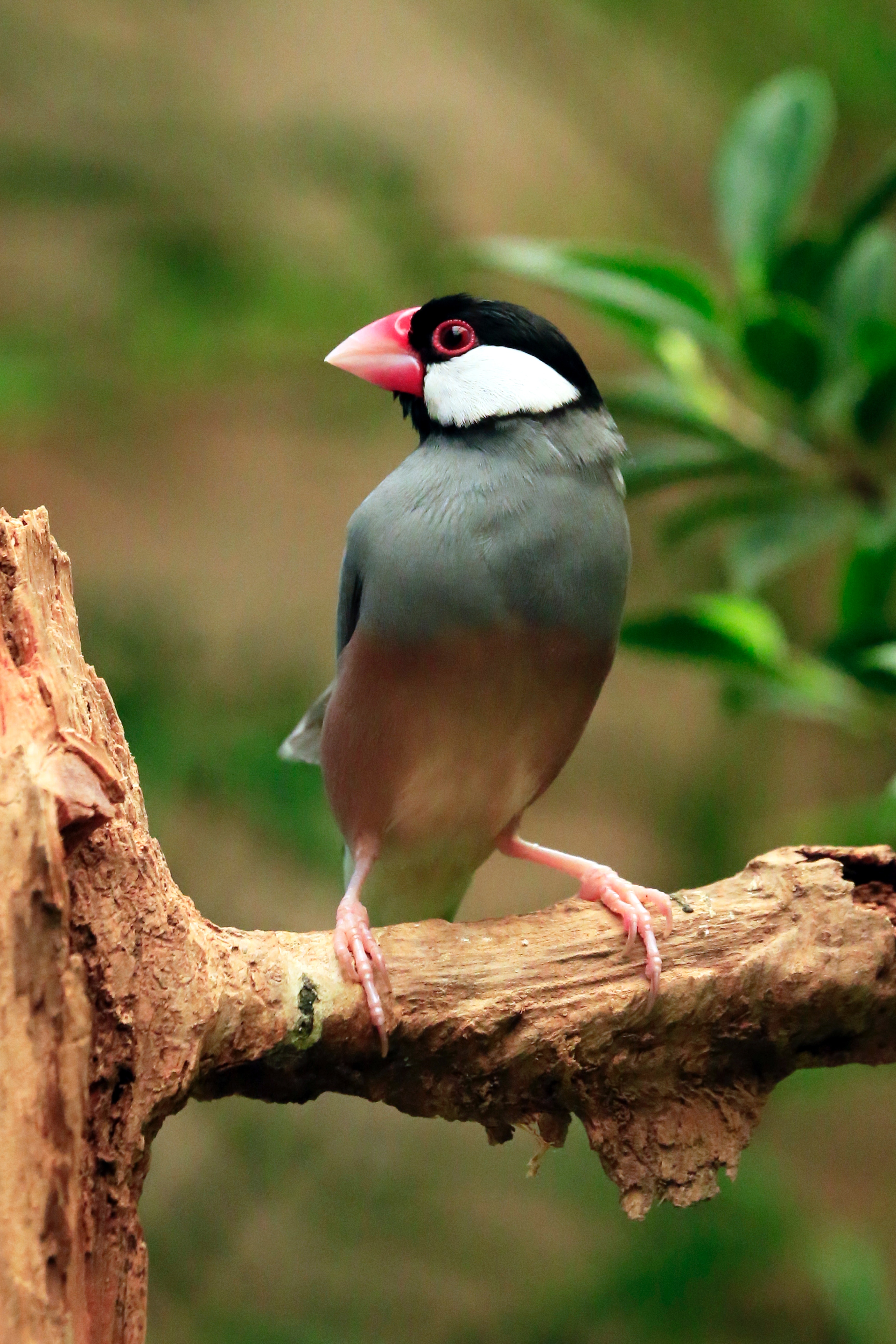
· Black-Headed Java Sparrow: This type has a black head and a white body, with a black tail and wings.

· Pied Java Sparrow: This type has a white body with black markings on the wings and tail.

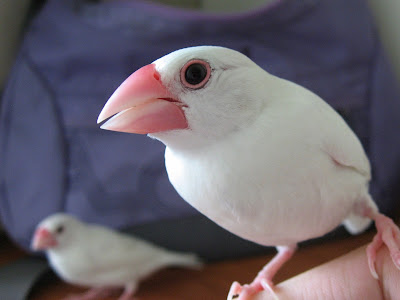
· White Java Sparrow: This type is entirely white, with red eyes.

· Lutino Java Sparrow: This type has a yellow body and red eyes.

· Cinnamon Java Sparrow: This type has a cinnamon-brown body and red eyes.

· Fawn Java Sparrow: This type has a fawn-colored body and red eyes.

These are some of the common types of Java Sparrows, but there are other varieties as well. Java Sparrows are known for their attractive plumage and melodious song, which makes them popular as cage birds.

Black-Headed Java Sparrow:

The Black-Headed Java Sparrow, also known as the Black-headed Munia or Chestnut Munia, is a type of Java Sparrow that is characterized by its black head and white body. The black head contrasts nicely with the white plumage of the body, giving the bird a striking appearance.

The males and females of this variety look similar, although males tend to have slightly more intense black on their heads. They are sexually dimorphic, with males having black and white plumage, while females are a duller brown color. They have a short, conical bill, and a plump body. They typically measure around 6 inches (15 cm) in length.

The Black Headed Java Sparrow is a popular pet bird due to its attractive plumage and melodious song. They are known to be easy to care for and can be kept in a cage or aviary. They are social birds and enjoy being kept in pairs or small groups. They are not wild birds and are not found in the wild. They are only found as pet birds.

Pied Java Sparrow:

The Pied Java Sparrow is a type of Java Sparrow that is characterized by its white body with black markings on the wings and tail. The black and white coloration creates a striking and distinctive appearance, making it a popular pet bird.

The males and females of this variety look similar, although males tend to have slightly more intense black on their wings and tail. They have a short, conical bill, and a plump body. They typically measure around 6 inches (15 cm) in length. They are sexually dimorphic, with males having black and white plumage, while females are a duller brown color.

Pied Java Sparrows are known to be easy to care for and can be kept in a cage or aviary. They are social birds and enjoy being kept in pairs or small groups. They are not wild birds and are not found in the wild. They are only found as pet birds. They are known for their attractive plumage and melodious song, which makes them popular as cage birds.

Like all Java Sparrows, Pied Java Sparrows are not a wild species and are not found in the wild. They are only found as pet birds. They need a well-balanced diet and a clean cage to live a healthy life. They should be provided with a cuttlebone for beak and nail maintenance, and also need daily interaction with their owner.

White Java Sparrows:

White Java Sparrows, also known as albinos, are a variety of Java Sparrow that is characterized by their entirely white plumage, with red eyes. They are a result of a genetic mutation that causes a lack of pigmentation in the feathers. They have a short, conical bill, and a plump body. They typically measure around 6 inches (15 cm) in length.

White Java Sparrows are a unique and striking-looking bird, they are a less common variety as they are a result of genetic mutation. They are not wild birds and are not found in the wild. They are only found as pet birds. They are known to be easy to care for and can be kept in a cage or aviary. They are social birds and enjoy being kept in pairs or small groups.

White Java Sparrows are known for their attractive plumage and melodious song, which makes them popular as cage birds. They are not wild birds and are not found in the wild. They are only found as pet birds. Like all Java Sparrows, they need a well-balanced diet and a clean cage to live a healthy life. They should be provided with a cuttlebone for beak and nail maintenance, and also need daily interaction with their owner.

It is important to note that in captivity, white birds like the White Java Sparrows are more sensitive to sunburn and skin cancers due to their lack of pigmentation, so they should be protected from direct sunlight or UV lights.

Lutino Java Sparrow:

A Lutino Java Sparrow is a variety of Java Sparrows characterized by its yellow or lemon-yellow body and red eyes. This coloration is the result of a genetic mutation that results in a lack of melanin pigmentation in the feathers. They are similar in size and shape to other Java Sparrows, and typically measure around 6 inches (15 cm) in length, with a short, conical bill and a plump body.

Lutino Java Sparrows are a less common variety as they are the result of a genetic mutation. They are not wild birds and are not found in the wild. They are only found as pet birds. They are known to be easy to care for and can be kept in a cage or aviary. They are social birds and enjoy being kept in pairs or small groups.

Lutino Java Sparrows are known for their attractive plumage and melodious song, which makes them popular as cage birds. They are not wild birds and are not found in the wild. They are only found as pet birds. Like all Java Sparrows, they need a well-balanced diet and a clean cage to live a healthy life. They should be provided with a cuttlebone for beak and nail maintenance, and also need daily interaction with their owner.

It is important to note that in captivity, white and yellow birds like the Lutino Java Sparrows are more sensitive to sunburn and skin cancers due to their lack of pigmentation, so they should be protected from direct sunlight or UV lights.

Cinnamon Java Sparrow:

A Cinnamon Java Sparrow is a variety of Java Sparrow characterized by its cinnamon-brown body and red eyes. This coloration is the result of a genetic mutation that results in a change in the amount and distribution of melanin pigmentation in the feathers. They are similar in size and shape to other Java Sparrows, and typically measure around 6 inches (15 cm) in length, with a short, conical bill and a plump body.

Cinnamon Java Sparrows are a less common variety as they are the result of a genetic mutation. They are not wild birds and are not found in the wild. They are only found as pet birds. They are known to be easy to care for and can be kept in a cage or aviary. They are social birds and enjoy being kept in pairs or small groups.

Cinnamon Java Sparrows are known for their attractive plumage and melodious song, which makes them popular as cage birds. They are not wild birds and are not found in the wild. They are only found as pet birds. Like all Java Sparrows, they need a well-balanced diet and a clean cage to live a healthy life. They should be provided with a cuttlebone for beak and nail maintenance, and also need daily interaction with their owner.

It is important to note that in captivity, cinnamon or any other color variant of Java Sparrows have the same requirements for diet, care, and habitat as regular Java Sparrows, and their mutation does not affect their well-being in any major way.

Fawn Java Sparrow:

A Fawn Java Sparrow is a variety of Java Sparrow characterized by its fawn-colored body and red eyes. This coloration is the result of a genetic mutation that results in a change in the amount and distribution of melanin pigmentation in the feathers. They are similar in size and shape to other Java Sparrows, and typically measure around 6 inches (15 cm) in length, with a short, conical bill and a plump body.

Fawn Java Sparrows are a less common variety as they are the result of a genetic mutation. They are not wild birds and are not found in the wild. They are only found as pet birds. They are known to be easy to care for and can be kept in a cage or aviary. They are social birds and enjoy being kept in pairs or small groups.

Fawn Java Sparrows are known for their attractive plumage and melodious song, which makes them popular as cage birds. They are not wild birds and are not found in the wild. They are only found as pet birds. Like all Java Sparrows, they need a well-balanced diet and a clean cage to live a healthy life. They should be provided with a cuttlebone for beak and nail maintenance, and also need daily interaction with their owner.

It is important to note that in captivity, fawn or any other color variant of Java Sparrows have the same requirements for diet, care, and habitat as regular Java Sparrows, and their mutation does not affect their well-being in any major way.
На проверке